Beirut Doesn't Want to Be Miami: A 2026 Nightlife Reality Check for American Travelers

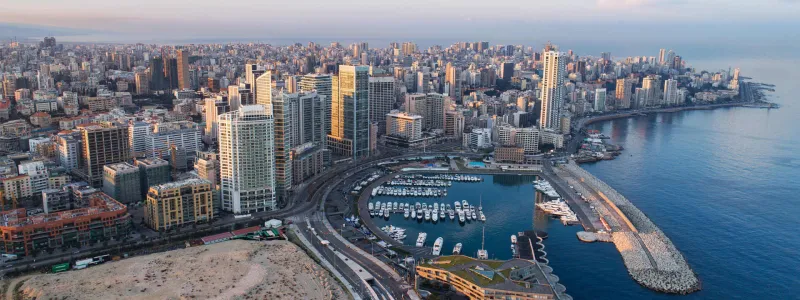
Photo: Beirut rooftop bar at night with city lights and Mediterranean skyline, via cdn.thehagueacademy.com
Every few months someone asks the same question: is Beirut the next Miami? Short answer — no, and that's the point. Beirut has its own rhythm, its own price logic, and its own unwritten rules, and the travelers who enjoy it most are the ones who stop grading it against Florida.
This is a comparison, not a sales pitch. Some things Miami genuinely does better. But if you're planning a night out in Beirut in 2026 with a companion on your arm and American expectations in your head, here's what actually changes.
Two Cities, Two Different Clocks
Miami runs on a schedule. Dinner at eight, club at eleven, the room is packed by one, and everything shuts down with a hard, expensive thud around four or five in the morning. Beirut runs on mood. A bar in Gemmayzeh might be empty at nine and shoulder-to-shoulder at midnight, and nobody considers that late.
What surprises Americans most is the pacing. There's no rush to move you from seat to seat, and there's no bottle-service pressure to hit a spend number in the first twenty minutes. People linger. They order in waves. They talk to the table next to them. If you show up at a Beirut lounge planning to be in and out in ninety minutes, you'll feel like you're the only one in a hurry.
The Cost Conversation Nobody Wants to Have
Here's the contrarian take: Beirut is not automatically the cheaper city anymore. It can be — sometimes dramatically — but only if you know where the pricing splits.
A cocktail in Mar Mikhael or Badaro usually lands well under what you'd pay in Wynwood or South Beach. A beer in Hamra is genuinely cheap. But step into a waterfront hotel bar in Downtown and you're suddenly paying Miami prices or more, in dollars, with a service charge layered on top. The gap isn't between cities — it's between neighborhoods within each city.
Where Beirut wins is the middle tier. That zone between dive bar and luxury lounge, where you get a well-made drink, a real seat, and decent service without a velvet rope — that tier is thin and expensive in Miami and surprisingly generous in Beirut.
Safety: Different Fears, Different Rules
This is where American assumptions get loudest. Beirut's reputation precedes it, and people arrive either over-cautious or oddly cavalier.
In practice, a normal night out in the central nightlife districts is unremarkable in the way any city's nightlife is unremarkable — you watch your drink, you don't wander into unfamiliar areas at 4 a.m., you use a ride app instead of hailing a stranger's car. The bigger practical concerns are mundane: uneven sidewalks, traffic that ignores its own signals, and neighborhoods where cabs become scarce after 2 a.m.
The real safety adaptation is social, not physical. Beirut is a small-city scene. People know each other. Word travels. Being loud, being rude, or being pushy about a companion's time gets remembered in a way it wouldn't at a Miami mega-club where you're anonymous by design.
Etiquette: Where Americans Accidentally Stand Out
A short list of habits that read as odd in Beirut:
- Splitting everything to the cent. Rounding up or covering a round is the norm. Pulling out a calculator is not.
- Talking price loudly in a venue. Discretion is currency here. Handle logistics quietly or beforehand.
- Assuming card acceptance everywhere. Cash still rules in plenty of bars, and small vendors may quote a different rate for cards.
- Treating the venue as a backdrop. In Beirut, you're a guest in someone's room. Greeting staff, tipping the bartender early, and being patient with slow service goes a long way.
The Companion Scene: Discretion Over Display
Miami's adult scene is performative — visible, branded, engineered for social media. Beirut's is quieter. Much of it runs through conversation, referral, and reputation rather than neon signage and velvet ropes.
That means dating and companion-friendly nights in Beirut tend to look more like a good dinner and a good bar than like a spectacle. If you're coming from Miami expecting a circuit of branded clubs with structured packages, you'll be underwhelmed at first — until you realize the tradeoff is a night that feels like an actual evening with an actual person rather than a transaction in a loud room.
Book ahead, keep arrangements private, and let your companion lead on venue choice. Locals know which places are welcoming, which have sane minimums, and which will treat a mixed party well.
What Miami Does Better (Yes, Really)
Honesty matters more than cheerleading. Miami beats Beirut on late-night infrastructure — you can find food, rides, and open doors at hours when Beirut gets thin. Miami's hospitality is more standardized, so first-timers face fewer surprises. And Miami's scene is more legible: menus, minimums, and door policies are posted, not inferred.
Beirut asks more of you. It rewards curiosity and punishes assumptions.
How to Plan Without Importing South Beach
Start later than you think. Eat late. Carry cash. Pick one neighborhood and stay in it rather than country-hopping across the city. Use a ride app and set a generous late-night budget. And treat the evening as a series of small decisions rather than a pre-booked itinerary.
The travelers who have the worst time in Beirut are the ones trying to force it into a Miami shape. The ones who love it show up curious, dress well, tip properly, and let the night find its own pace. That's not a marketing line — it's just how the city works.